
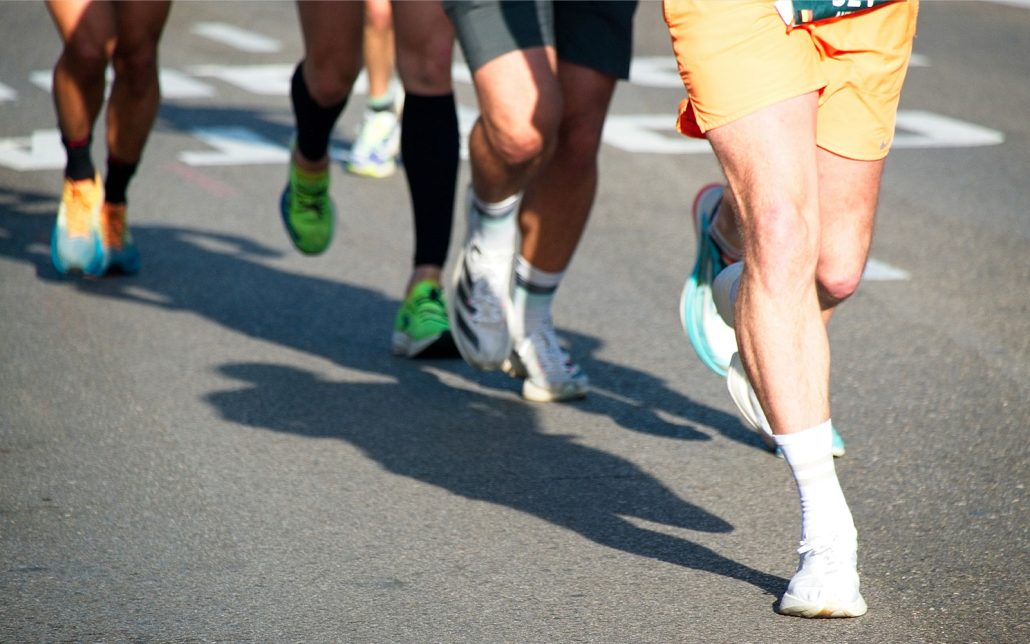
Strength Training for Runners
Running alone isn’t good enough for improving your running. You need strength training to reduce your risk of injury, improve your running economy, and stop your technique breaking down as you get tired.
Why Running Alone Isn’t Enough
Running involves relatively low, repetitive forces compared to resistance training, so it doesn’t create enough of a stimulus to build real strength. It also doesn’t work your muscles in isolation or through a full range of motion — which is exactly where a lot of runners end up weak, particularly through the hips and glutes.
Building Leg Strength
We need to train the legs and build strength around the major muscle groups — glutes, quads, hamstrings, and calves.
- Split squats are a great place to start. They’re a single-leg movement, so you can build strength on each side individually and address imbalances that running alone won’t fix.
- Hip hinge movements like deadlifts or RDLs are excellent for the hamstrings and glutes — the muscles driving you forward with every stride and often underworked by running alone.
- Calf raises for calf isolation.
Glutes and Hip Stability
The glutes play a huge part in running properly, so working them in isolation is worthwhile. This means combining:
- Lower-rep, higher-load work to build raw strength
- Higher-rep work to build the muscular endurance to hold form for the length of a run
Hip and knee stability matter too — specifically strength around the outside of the hip, the glute medius. Exercises like reverse lunges, split squats, and other single-leg movements that demand extra stability transfer directly onto running.
Core Training
Isolated ab work has its place, but runners also need rotational — really, anti-rotational — core training. Your core’s job when running isn’t crunching; it’s resisting rotation, keeping your torso stable so your energy goes into moving forward rather than twisting side to side. This improves running form over time.
Plyometrics
Explosive, jumping-based movements — bounds, hops, box jumps — train your muscles and tendons to store and release energy quickly. This directly improves running economy and power, especially through the push-off phase of your stride and builds a kind of reactive strength that running alone doesn’t train.
Example Program
Day 1 — Strength Focus
|
Exercise
|
Sets
|
Reps
|
|---|---|---|
|
Split squats
|
3
|
6–8 per leg
|
|
Deadlift or RDL
|
3
|
6–8
|
|
Calf raises
|
3
|
8–10
|
|
Pallof press (anti-rotation core)
|
3
|
8–10 per side
|
|
Shoulder press or row (upper body)
|
2–3
|
8–10
|
Day 2 — Stability & Power Focus
|
Exercise
|
Sets
|
Reps
|
|---|---|---|
|
Reverse lunges
|
3
|
10–12 per leg
|
|
Single-leg RDL (stability)
|
3
|
10–12 per leg
|
|
Box jumps or bounds (plyometrics)
|
3
|
5–6
|
|
Standing calf raises (single-leg)
|
3
|
12–15
|
|
Dead bug or side plank (anti-rotation core)
|
3
|
10–12 or 30 sec/side
|
|
Lat pulldown or band pull-apart (upper body)
|
2–3
|
10–12
|